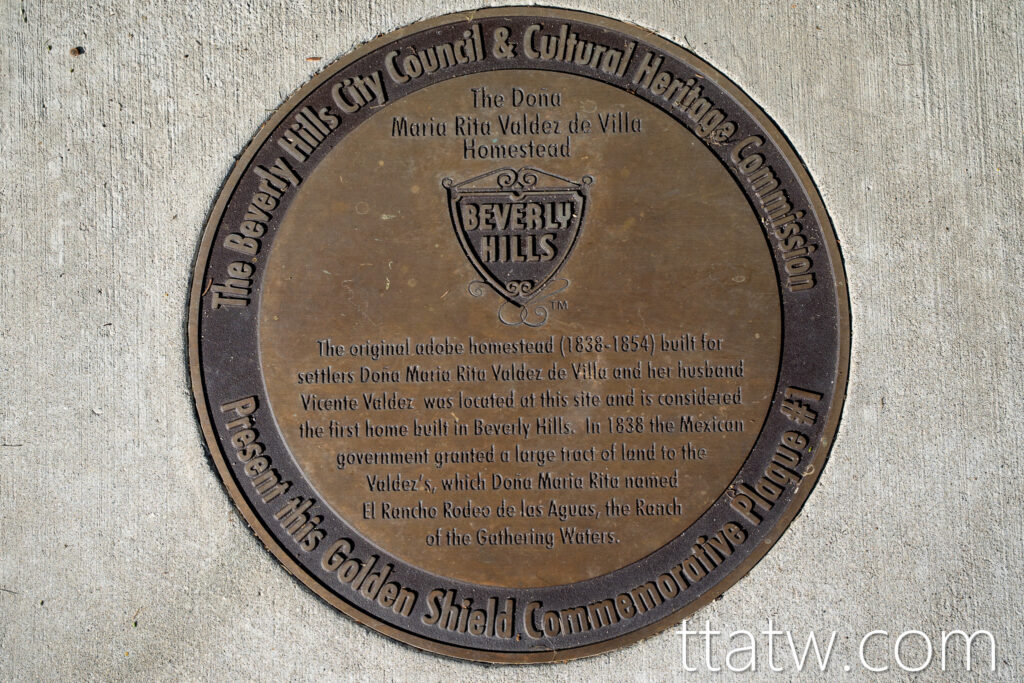


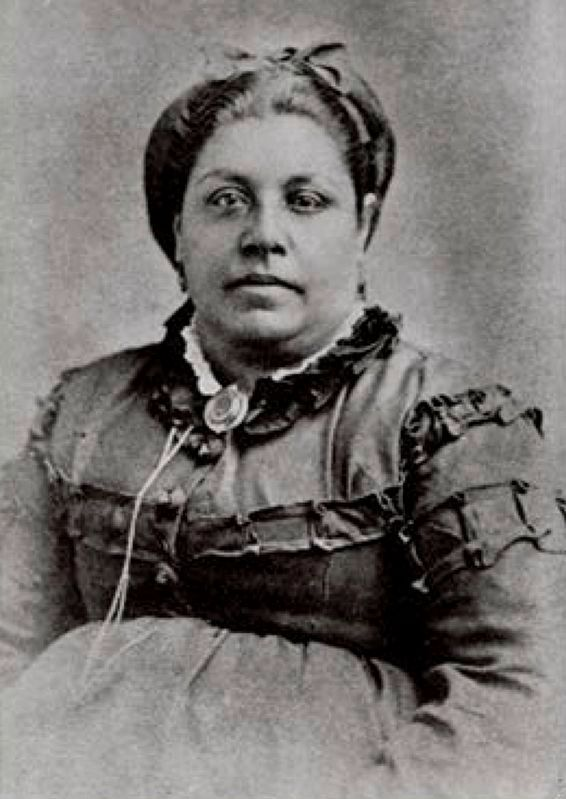
In the 1830s, Maria Rita Valdez Villa, granddaughter of Luis Quintero and Maria Quintero, and great granddaughter of an enslaved African, was granted roughly forty five hundred acres known as El Rancho Rodeo de las Aguas. That land is now Beverly Hills. From her adobe near present day Alpine Drive and Sunset Boulevard, Maria Rita ran a working operation that included cattle, farming, and gardens. She was also known for hosting an annual rodeo beneath a large eucalyptus tree near what are now Pico and Robertson, a gathering that marked prosperity, community, and control of the land.
Spain recruited poor working families from what is now northern Mexico and promised them land and opportunity if they crossed the Sonoran Desert and established a new settlement. These families were known as pobladores.
At seventeen, Maria Rita married Spanish soldier Vicente Ferrer Villa in 1808. They had three children together. He died roughly twenty years later, after Mexico had gained independence and Los Angeles had become a Mexican governed territory.
As a young widow, Valdez was forced to defend her land repeatedly. She is believed to have built her adobe home near what is now Alpine Drive and Sunset Boulevard, anchoring her family there as political power shifted around her. Because land ownership depended on productivity, she turned her rancho into a working enterprise. She hired paid laborers, many of them Native people, and focused on cattle ranching. The operation became profitable enough that the Mexican government formally granted her title to the land.
Her struggle did not end there. In 1848, after the Mexican War, Los Angeles was occupied by the United States Army and Valdez once again had to fight to keep what she had built.
“She must have witnessed a great upheaval in the lives of the indigenous peoples of the area, who suffered a demographic decline due to diseases brought by the Europeans and an American period that brought much more violence,” said historian William Deverell of the University of Southern California.
According to Torres Rouff, the land Valdez occupied was sacred to the Tongva, called Gabrielinos by the Spanish. That reality makes her legacy complicated. She embodied a historical and political contradiction, a woman descended from African enslavement and impoverished Mexican settlers who nevertheless became a landholding colonizer in California.
In 1852, the rancho was attacked by Native Californian outlaws, leading to a gunfight in a stand of walnut trees near what are now Benedict Canyon and Chevy Chase. The violence made continued life on the rancho untenable. In 1854, Maria Rita sold the property to Henry Hancock and Benjamin D. Wilson for four thousand dollars. The sale followed a familiar pattern used throughout the nineteenth century, intimidation and instability applied to remove Black landholders, clearing the way for European settlers to consolidate property that was already built and productive.
Today, the site of Maria Rita’s home is occupied by the Beverly Hills Hotel, with a plaque marking her ownership of the land. It is worth pausing to imagine an alternate present, one where Sunset Boulevard carried her name instead.